

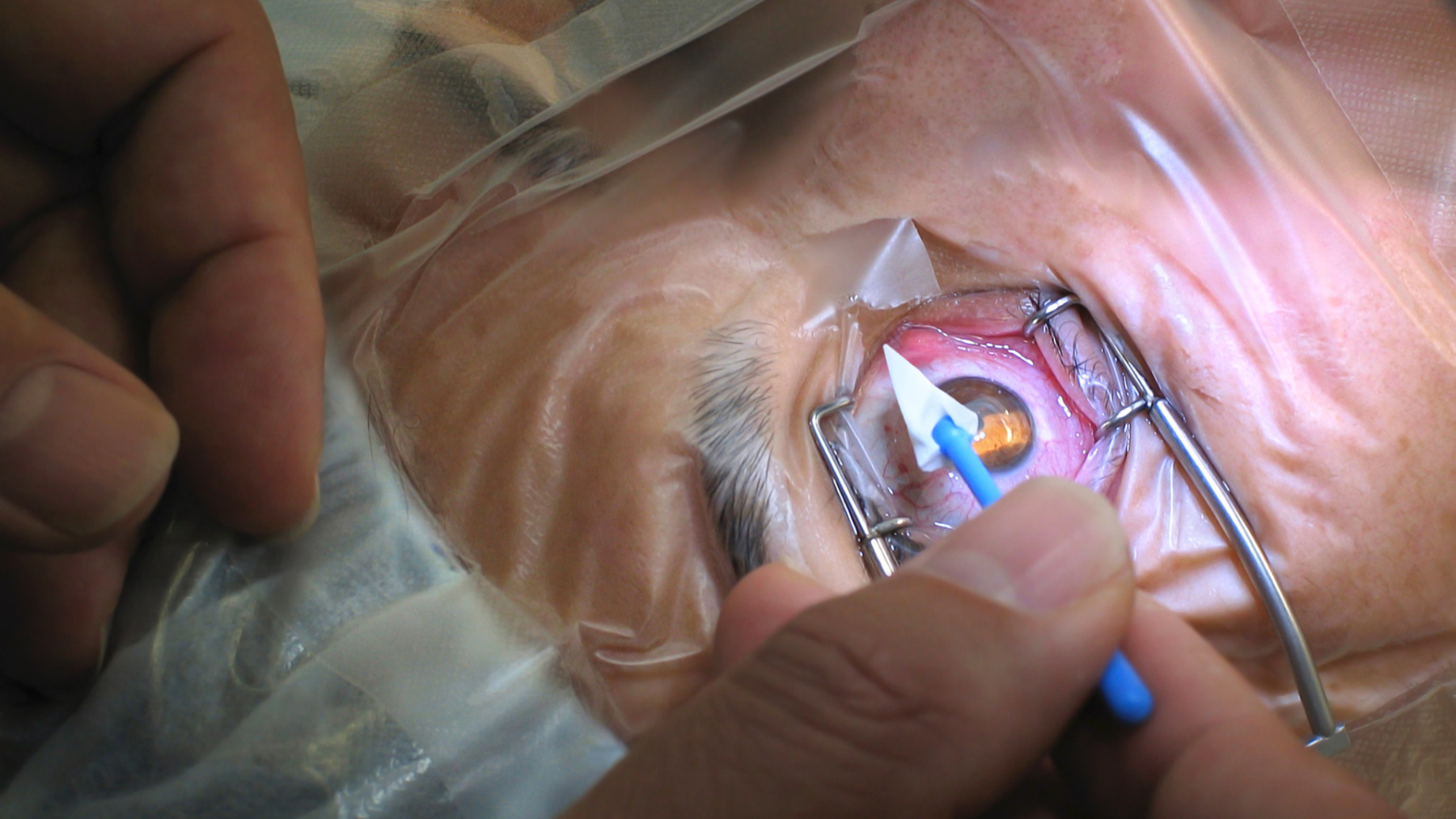
Keratoconus (KC)
Keratoconus is a progressive corneal disorder in which the cornea gradually becomes thinner and assumes a cone-like shape, leading to blurred vision, irregular astigmatism, and reduced visual quality. The condition often develops during adolescence or early adulthood and may affect both eyes.
As keratoconus progresses, everyday activities such as reading, driving, and working on digital screens may become increasingly difficult due to visual distortions and reduced visual clarity.
Modern ophthalmology focuses not only on improving vision, but also on stabilizing the cornea and slowing disease progression. Corneal Cross Linking (CXL) is currently considered the most effective treatment for preventing further progression of keratoconus and preserving long-term visual function.
Corneal Cross Linking (CXL)
Corneal Cross Linking (CXL) is a minimally invasive procedure designed to strengthen the cornea by increasing the natural bonds between collagen fibers. The treatment aims to stabilize the cornea and stop the progression of keratoconus.
During the procedure, riboflavin (vitamin B2) eye drops are applied to the cornea and activated with ultraviolet-A (UV-A) light. This process enhances corneal rigidity and improves biomechanical stability.
CXL is recognized as the gold standard treatment for progressive keratoconus because it can significantly reduce the risk of further corneal deformation and decrease the likelihood of future corneal transplantation.
Who can benefit from Corneal Cross Linking (CXL)?
Corneal Cross Linking (CXL) is recommended for patients with:
- Progressive keratoconus
- Corneal ectasia
- Increasing irregular astigmatism
- Progressive corneal thinning
- Changes in corneal topography associated with keratoconus progression
Early diagnosis and timely treatment are essential, as performing CXL in the early stages of keratoconus can help preserve better visual quality and long-term corneal stability.
Each patient undergoes a detailed ophthalmological assessment, including corneal topography and pachymetry measurements, to determine suitability for treatment.
Goals and advantages of CXL
The primary goal of Corneal Cross Linking (CXL) is to halt or significantly slow the progression of keratoconus by strengthening the corneal structure.
The advantages of CXL include:
- Stabilization of the cornea
- Prevention of further keratoconus progression
- Preservation of visual function
- Reduction in the risk of corneal transplantation
- Minimally invasive treatment
- Long-term corneal strengthening
- Rapid recovery and return to daily activities
In some patients, gradual improvement in corneal shape and visual quality may also occur after treatment.
The CXL procedure
Corneal Cross Linking (CXL) is a safe, minimally invasive procedure performed under topical anesthesia. Riboflavin eye drops and controlled UV-A light are used to strengthen the corneal collagen fibers and stabilize the cornea. Patients return home the same day, while recovery and corneal strengthening gradually improve over the following weeks.
Anastasios Zafeiriadis, MD
Ophthalmic Surgeon
Specialist in Cataract & Laser Refractive Surgery
Ophthalmica Institute