

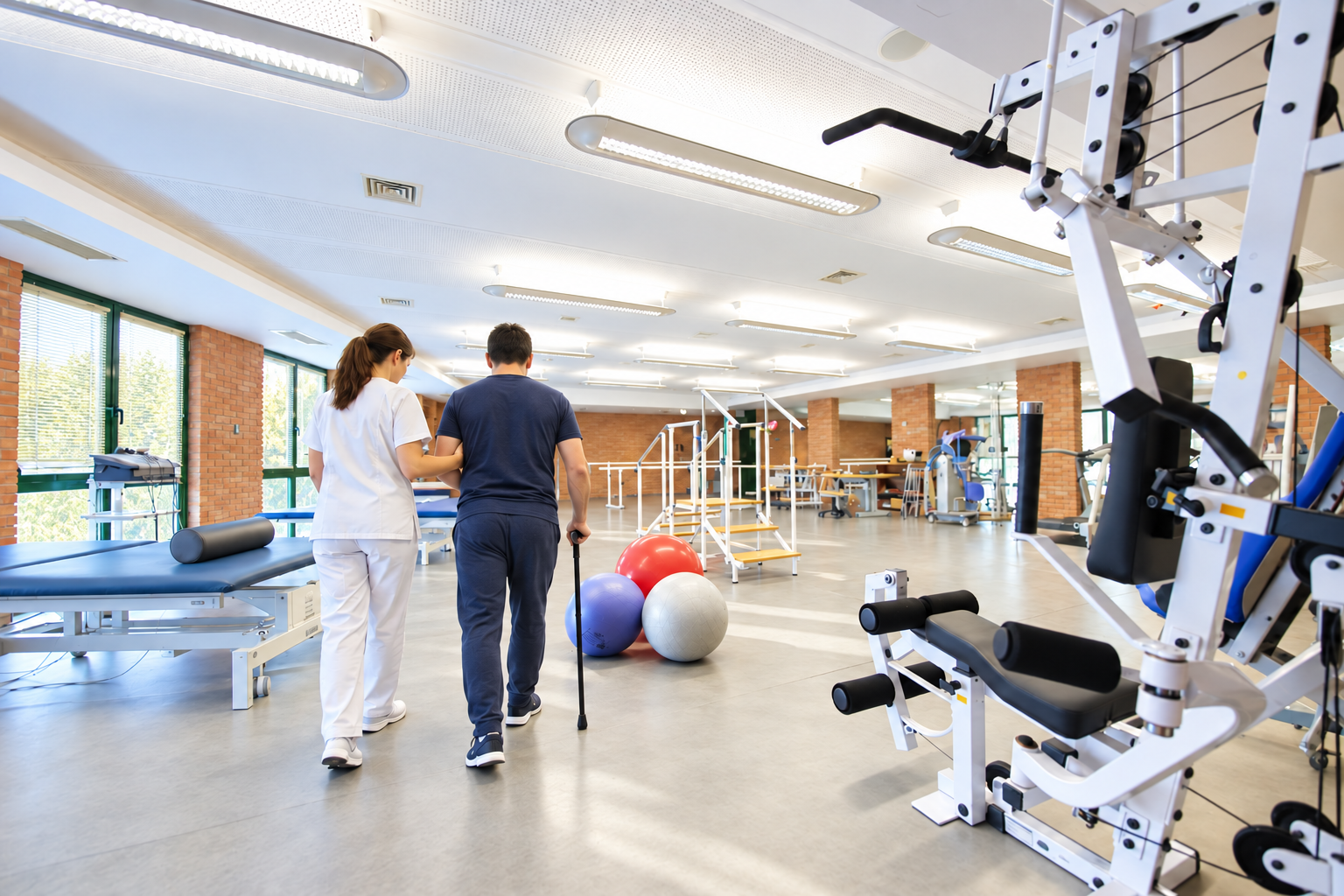
Completing hospital treatment does not always mean that a person is ready to return safely to everyday life. Following a stroke, neurological condition, major surgery, injury or prolonged hospitalisation, many patients continue to face difficulties with movement, balance, communication, self-care and confidence.
Modern rehabilitation addresses this important transition. Its purpose extends beyond clinical recovery: it helps individuals regain the functional abilities required to participate in family, social and professional life as independently as possible.
An effective rehabilitation programme begins with a comprehensive multidisciplinary assessment. Rehabilitation physicians, physiotherapists, occupational therapists, speech and language therapists, psychologists, nurses and other healthcare professionals work together to identify each patient’s needs and define realistic, measurable goals.
These goals may include standing and walking safely, improving upper-limb function, communicating more effectively, managing personal care or preparing for the physical demands of the home environment. Progress is continuously evaluated, allowing the rehabilitation plan to be adapted as the patient’s abilities evolve.
Technology can further support this process. Robotic systems, body-weight-supported training, virtual reality and advanced therapeutic equipment can provide intensive and repetitive practice. However, technology is most effective when combined with professional expertise, active patient participation and a strong therapeutic relationship.
Emotional readiness is equally important. Returning home after a serious health event can create uncertainty for both patients and their families. Education, psychological support and caregiver training can reduce anxiety and help families feel better prepared for the next stage of recovery.
At FILOKTITIS Rehabilitation Center, the transition from hospital to home is approached as an integral part of rehabilitation. Treatment focuses not only on improving clinical outcomes, but also on restoring autonomy, dignity and confidence.