

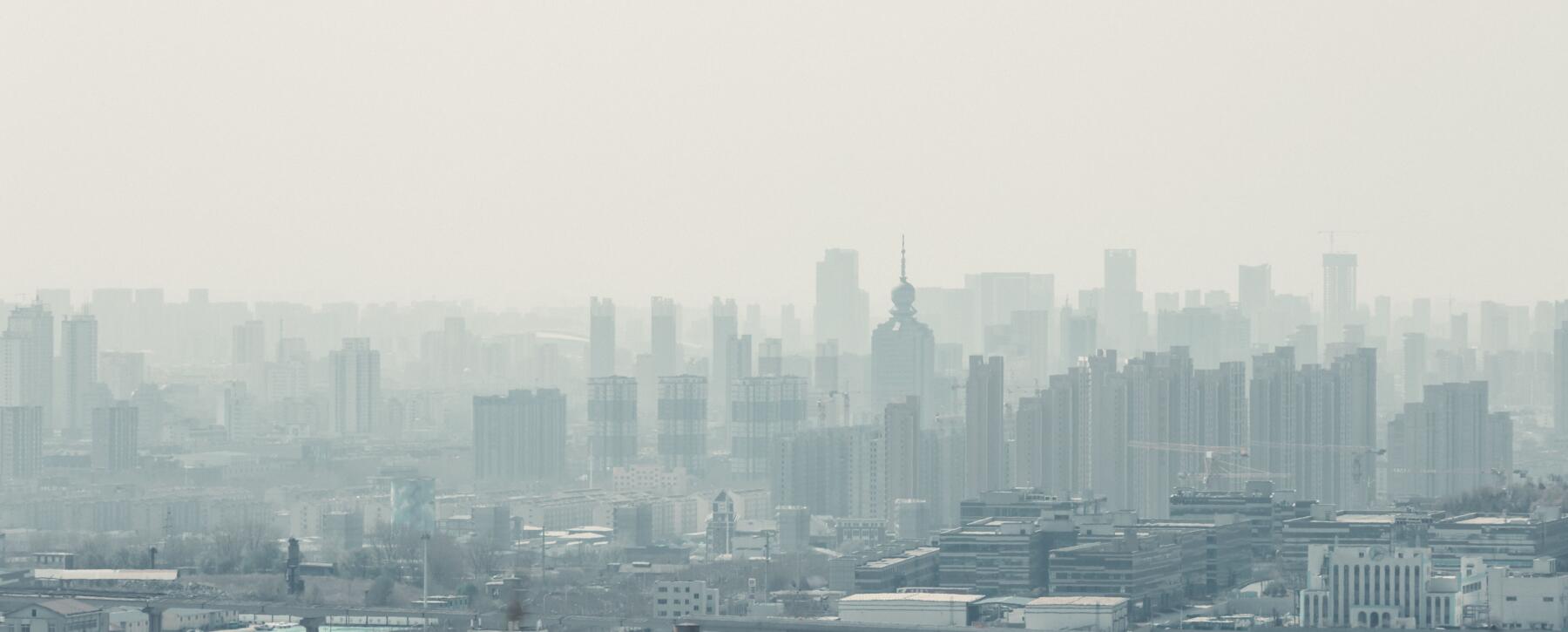
Air pollution consists of the enrichment of the atmosphere with toxic, asphyxiating or irritant particles, including solid particles such as particulate matter (soot and dust), particularly those with an aerodynamic diameter of 2.5–10 μm (PM2.5–10); liquid particles, such as water droplets; or gases, such as tropospheric ozone (tO₃), methane (CH₄), sulphur dioxide (SO₂), carbon dioxide (CO₂), nitrogen oxides (NOx) and volatile organic compounds (VOCs). These are classified as primary pollutants, such as CO₂ and NOx, or secondary pollutants, such as tO₃, which is formed through photochemical reactions. Their emission, transport, transformation, neutralisation and deposition are directly or indirectly influenced by meteorological conditions, their rate of production and their residence time in the atmosphere.
Air pollution causes more than 7 million premature deaths worldwide every year, as well as an even greater number of hospitalisations and lost working days, with an enormous social and economic cost.
Climate change, on the other hand, constitutes a planetary-scale, adverse alteration of climatic conditions affecting the natural environment, resulting from global warming through the greenhouse effect. It affects the fragmentation and dispersion of pollutants and their precursor substances, induces their deposition and reduces atmospheric ventilation. Climatic conditions are altered, and extreme weather events occur, such as prolonged periods of rainfall, widespread wildfires and episodes of extreme cold. These phenomena ultimately lead to drought, deforestation, melting of Arctic ice, rising sea levels, extensive flooding and the desertification of large areas of the planet.
Anthropogenic emissions of greenhouse gases have increased dramatically compared with the pre-industrial era, driven by economic and population growth. This has resulted in a substantial increase in soot, CO₂, CH₄ and NOx, leading to a marked rise in global temperatures since the beginning of the 20th century. Today, greater quantities of CO₂ are being released, resulting in global warming and ocean acidification and, consequently, reduced CO₂ absorption and increased particulate matter concentrations. These changes contribute to the deterioration of adverse health effects.
CO₂ harms human health by causing the greenhouse effect, which leads to an increase in ambient temperatures by trapping solar energy. This ultimately contributes to the onset and gradual worsening of climate change and, consequently, to increased morbidity and mortality, particularly among individuals at the extremes of age and patients with cardiopulmonary, metabolic, infectious and psychiatric disorders. Global atmospheric CO₂ concentration is a critical predictor of future climate fluctuations and their adverse consequences for human health.
Environmental toxic agents, such as dietary components, xenobiotic chemicals, low-dose radiation and even stress, may exert long-term effects on gene expression, leading to pathological conditions such as asthma and allergies, neoplasms, diabetes mellitus, obesity and even behavioural disorders, including irritability, anxiety, depression and schizophrenia. These findings highlight global warming as a potent factor that amplifies the adverse effects of exposure to particulate matter (PM), particularly soot, not only through its local irritant action on the epithelium of the tracheobronchial tree and the pulmonary parenchyma, but also through multiple forms of genetic damage. Indeed, an as yet undetermined proportion of children who were exposed to natural disasters during intrauterine life may develop disorders of growth and adaptability through DNA methylation, a well-established mechanism of epigenetic action arising from environmental disturbances and resulting in long-term alterations in gene function. The reasons for this aforementioned uncertainty are sought in the fact that prospective studies include children without reference to their intrauterine history, which determines their degree of susceptibility to the adverse effects of environmental disasters.
Evidence of the adverse effects of climate change on the human genome remains, for the time being, sporadic and limited to the effects of low temperatures and particulate matter on DNA methylation in older adults and newborns. Nevertheless, these findings open up an interesting field of research into the effects of climate change on human health.
Konstantinos Kouskoukis
Professor of Dermatology – Lawyer
B’ Vice President GDHI
President Hellenic Academy of Thermal Medicine
President World Academy of Chinese & Complimentary Medicine