

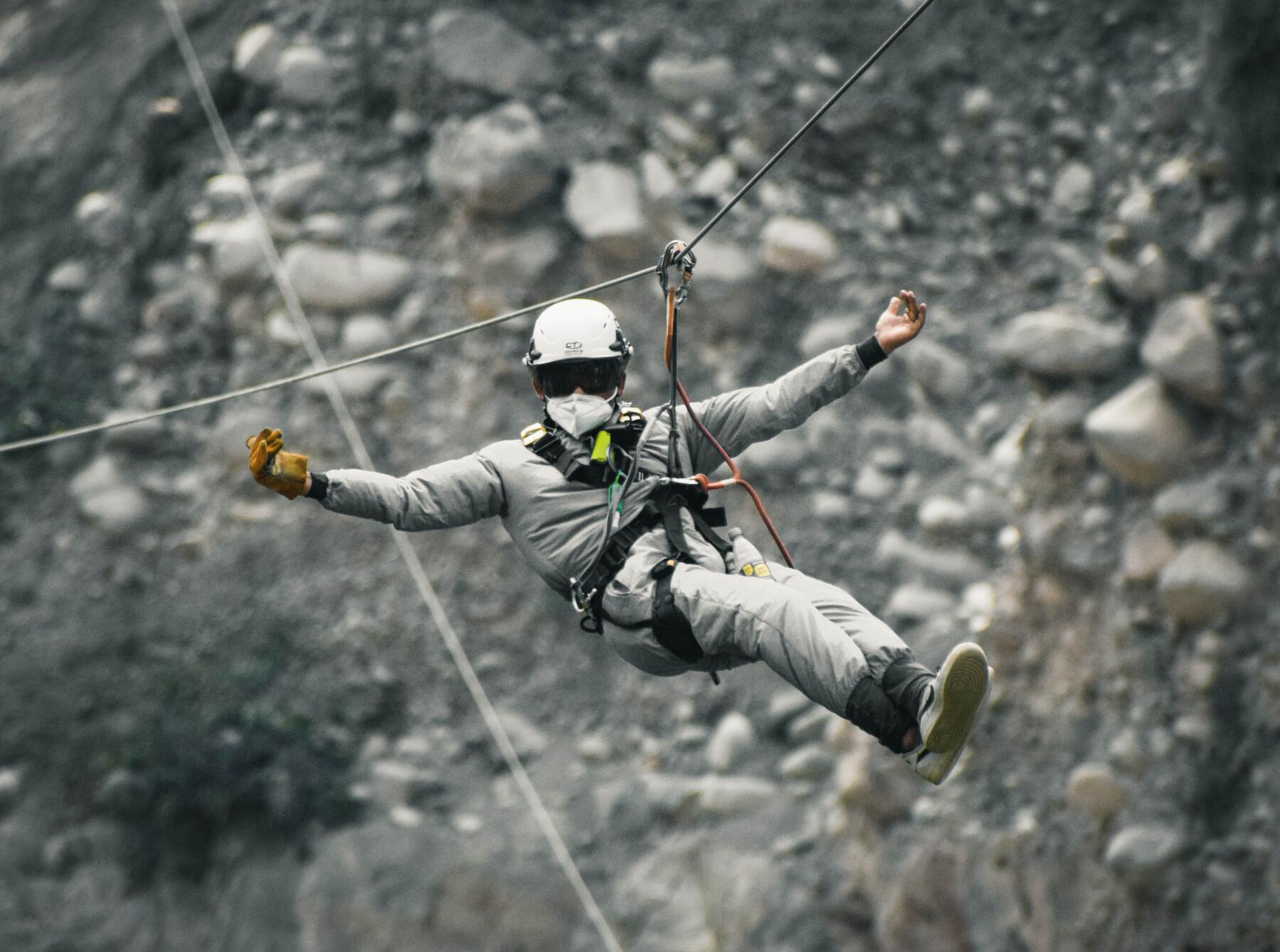
The growing influence of social media is a powerful force driving demand in the extreme tourism market, as Instagram and YouTube serve as virtual showcases for breathtaking adventures, attracting a global audience of adventure enthusiasts. Travelers are inspired by visually appealing content and actively seek unique and thrilling experiences to share on their own social media platforms, thereby promoting a continuous cycle of inspiration and exploration.
This dynamic interaction across social media platforms not only strengthens the momentum of extreme tourism but also contributes to a sense of fear of missing out (FOMO) among younger people, encouraging them to actively participate in adrenaline-inducing activities.
Extreme adventure tourism is expected to experience explosive growth, reaching USD 91 billion by 2032, with a growth rate of 14%, as increasing numbers of people seek unconventional travel experiences. In response, the market is offering high-energy activities, including extreme sports and daring adventures.
Individual travelers in the extreme tourism sector seek freedom by independently exploring remote destinations, including experiences such as navigating rugged terrain and discovering hidden gems.
By age group, the 25–45 age segment held the largest market share in 2022, accounting for more than two-fifths of global extreme tourism market revenues, and is estimated to maintain its leading position throughout the forecast period.
The extreme tourism activities pursued by these travelers include seeking new experiences, fulfilling a sense of adventure, exploring nature, seeking adrenaline, embracing physical challenges, and experiencing cultural immersion.
However, the under-25 segment is projected to record the highest CAGR of 15.3% between 2023 and 2032. These travelers crave experiences that stimulate adrenaline and dopamine and involve the release of cortisol, such as skydiving, mountaineering, and extreme sports. Youthful energy drives their pursuit of excitement, exploration, and outdoor adventures with passion, eccentricity, and curiosity.
The Asia-Pacific region is experiencing a boom in extreme tourism due to its diverse landscapes, cultural heritage, infrastructure development, improved accessibility, and rising disposable incomes.
The global adventure tourism market was valued at USD 324.9 billion in 2022 and is projected to “soar” to approximately USD 2 trillion by 2032, registering a compound annual growth rate (CAGR) of 19.5% over the decade.
The impressive growth of the market is driven by a fundamental transformation in consumer travel preferences, as travelers across demographic groups increasingly seek adventure-based, outdoor, and culturally immersive experiences rather than conventional leisure travel.
Key growth drivers include rising income levels in emerging economies, declining air travel costs, improved accessibility, the rapid penetration of smartphones and the internet, which enables seamless travel planning, and the growing role of big-data analytics and artificial intelligence in personalizing adventure travel offerings.
A study identified the top nature-based bucket-list travel experiences and analyzed more than 1,500 social media comments in order to identify the most widely discussed adventure trips on travelers’ wish lists.
As travelers increasingly seek experiences closer to nature and adrenaline-filled moments, the number-one experience is an underwater activity ideal for the daring and thrill-seeking traveler. It ranks at the top of travel bucket-list priorities and is becoming increasingly popular.
Global search interest in shark-cage diving increased by more than 1,400% year-on-year.
This adventurous activity gives travelers the opportunity to encounter a shark from the safety of a cage, from the Galápagos Islands to the Western Cape of South Africa.
The bucket list includes the Northern Lights; Iguazu Falls (Argentina, Brazil); gorilla trekking (Uganda, East Africa); Banff National Park (Alberta, Canada); the Galápagos Islands (Ecuador); the Grand Canyon (Arizona, USA); Victoria Falls (Zimbabwe, Africa); the Amazon rainforest (South America); horseback riding (Mongolia); the Great Barrier Reef (Australia); exploration of Antarctica; an African safari; Patagonia (Argentina, Chile); Svalbard (Norway); and space travel.
The tourism industry has identified this emotional impulse and seeks to reproduce it by meeting the demand of those for whom the concept of a holiday represents a challenge, and for whom excitement is intrinsically associated with intense, turbulent, and even arduous experiences.
Society arguably benefits from all those individuals who seek intense thrills and voluntarily experiment as researchers and astronauts, with fatality statistics failing to deter them from pursuing their dreams.
One of the paradoxes is that risk functions as a magnet: insecurity attracts rather than deters, as travelers seek to experience a state of exhilaration.
Climate change and the destruction of nature are limiting access to popular destinations. Too many tourists are visiting environmentally sensitive areas. Virtual travel offers a large-scale solution. Future experiences will go far beyond today’s 360-degree videos. They will engage sight, hearing, smell, temperature, and atmospheric pressure. Travel experiences will appear remarkably lifelike.
These digital worlds will provide access to otherwise difficult-to-reach places. People will be able to visit coral reefs, polar regions, or historical monuments.
Driven by growing demand for experiential and outdoor travel, the integration of digital technology, and the expanding global middle class seeking unique travel experiences, the adventure tourism industry is rapidly emerging as one of the most exciting growth sectors in global tourism.