

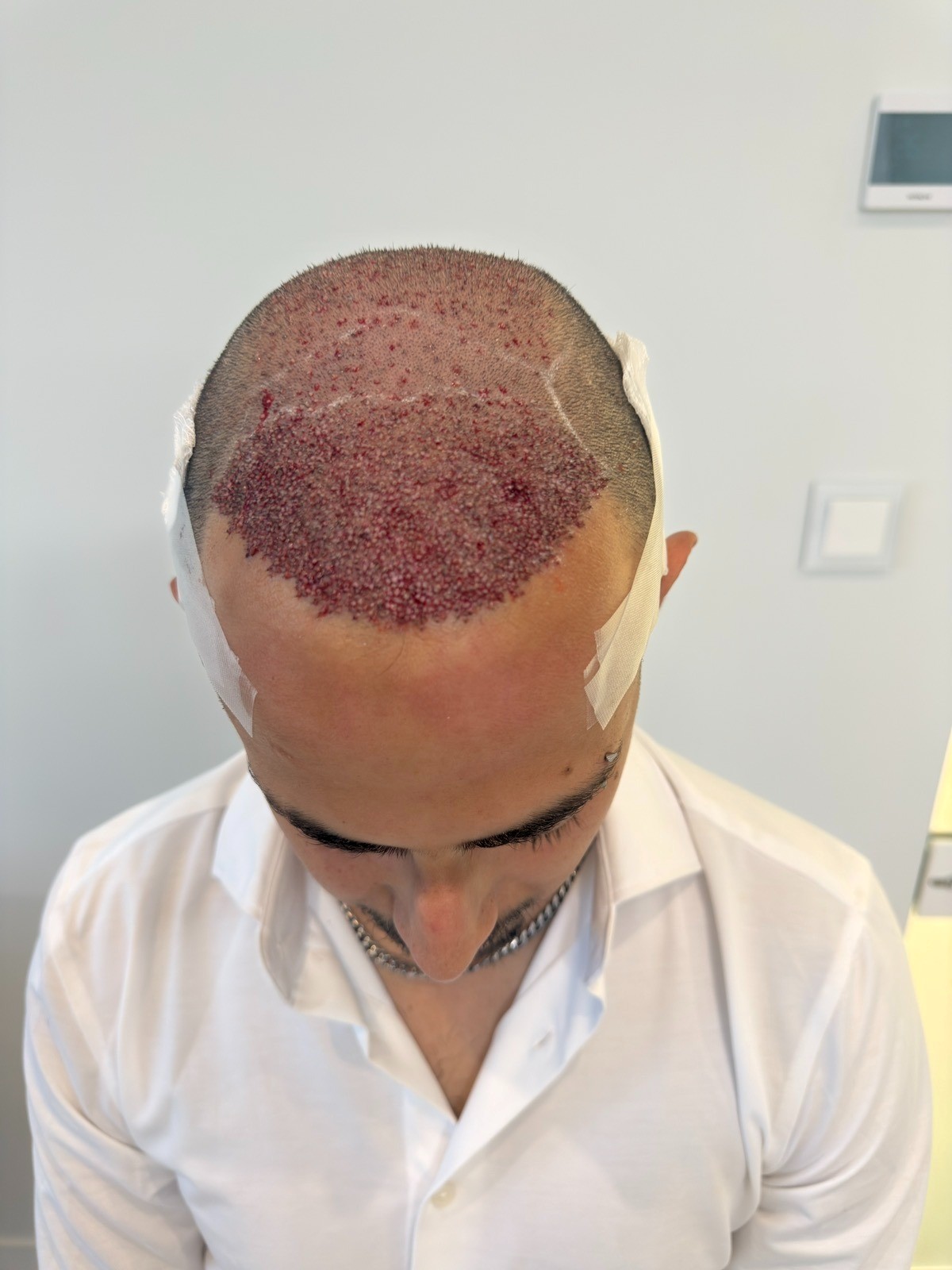
Most patients believe that the success of a hair transplant is measured by the number of grafts transplanted. In reality, the number of grafts is only one part of the equation.
What truly determines whether a result will look natural—not only during the first year but even a decade later—is the proper design of the hairline.
The hairline serves as the frame of the face. It influences appearance, facial expression, perceived age, and the overall harmony of facial features. A well-designed hairline can produce an exceptional result, while a poorly planned one can undermine even the most technically flawless hair transplant.
For this reason, hairline design is not merely a preoperative step. It is one of the most important decisions in the entire procedure.
The Biggest Concern for Patients
In the vast majority of cases, patients are less concerned about the transplant procedure itself and more concerned about the final outcome.
The most common questions include:
- Will it look natural?
- Will people be able to tell that I had a hair transplant?
- Will the new hairline suit my face?
- How will the result look in 10 or 20 years?
These concerns are entirely reasonable, as the hairline is the most visible aspect of a hair transplant.
The goal is not to create a “perfect” hairline, but rather one that appears natural and harmonizes with the individual’s facial features.
Hairline and Facial Balance
Hairline design is not only about hair—it is about overall facial balance.
When designing a hairline, several factors must be considered, including:
- Facial proportions
- Forehead height and shape
- Temple position
- Gender-specific characteristics
- Patient age
For this reason, two patients with a similar degree of hair loss may require completely different hairline designs.
The objective is not to create a hairline that looks impressive on paper, but one that complements the individual’s facial features and appears natural from every angle and facial expression.
The Most Common Hairline Design Mistakes
An Excessively Low Hairline
One of the most common mistakes is placing the hairline too low on the forehead in an attempt to achieve a more youthful appearance.
While it may initially look impressive, it often fails to age naturally with the face and requires a disproportionately large number of grafts.
A Perfectly Straight and Symmetrical Hairline
In nature, hairlines are neither perfectly straight nor completely symmetrical.
An overly geometric hairline is often one of the clearest signs that a hair transplant has been performed.
Naturalness comes from subtle irregularities and mild asymmetries.
Incorrect Graft Selection
The very front of the hairline should be created primarily with single-hair grafts.
Using double- or triple-hair grafts too far forward can result in an unnatural and harsh appearance.
Incorrect Implantation Angles and Direction
Natural hairs grow at specific angles and directions.
When grafts are implanted incorrectly, the result appears less natural and may even make everyday styling more difficult.
Ignoring Future Hair Loss
A hair transplant should never be planned only for the present.
The potential progression of androgenetic alopecia over the coming years is an essential factor when designing a hairline so that the result remains harmonious in the future.
How Is a Natural Hairline Designed?
Hairline design is a highly individualized process that takes into account:
- Facial shape and proportions
- Patient age
- Quality and availability of the donor area
- Degree of hair loss
- Future progression of alopecia
For this reason, there is no single ideal hairline that suits everyone.
The correct hairline is the one that appears natural for a specific individual—not one that follows a predetermined template.
Age and Hairline: Why a Youthful Hairline Is Not Always Natural
One of the most common misconceptions is that the lower the hairline, the better the result.
In reality, a properly designed hairline should correspond to the patient’s age and the natural evolution of their facial features.
A 50-year-old man does not necessarily need the same hairline he had at 18.
On the contrary, an excessively low or overly youthful hairline may look unnatural and require an unnecessarily large number of grafts.
The goal is not to recreate adolescence.
The goal is to restore a natural, balanced, and timeless appearance.
Hairline or Density?
Many patients focus exclusively on graft numbers and density.
In reality, a well-designed hairline is often more important than excessive density.
The human eye first perceives the facial outline and hairline.
A natural and harmonious hairline can create the impression of greater density and significantly improve the patient’s overall appearance.
A Hairline Is Not Designed for Next Year
Hair transplantation is a long-term strategic decision.
When planning a hairline, the physician considers not only the patient’s current appearance but also:
- The likely progression of hair loss
- Preservation of donor hair reserves
- The potential need for future procedures
- The natural aging process
A proper hairline is not designed for next year.
It is designed for the next decade.
This is why long-term strategic planning is an integral part of a successful hair transplant.
In Summary
At Guru Derma Hair Clinic, the success of a hair transplant is not measured solely by the number of grafts transplanted.
It is measured by how well the result harmonizes with the patient’s facial features, remains natural over time, and respects the future progression of hair loss.
A natural result depends on a combination of factors: proper hairline design, appropriate graft selection, natural implantation angles, and long-term planning tailored to the patient’s individual needs.
A truly successful hair transplant is not the one that attracts attention.
It is the one that makes people feel as though the hair has always been there.
And the secret behind that result lies in the proper design of the hairline.