

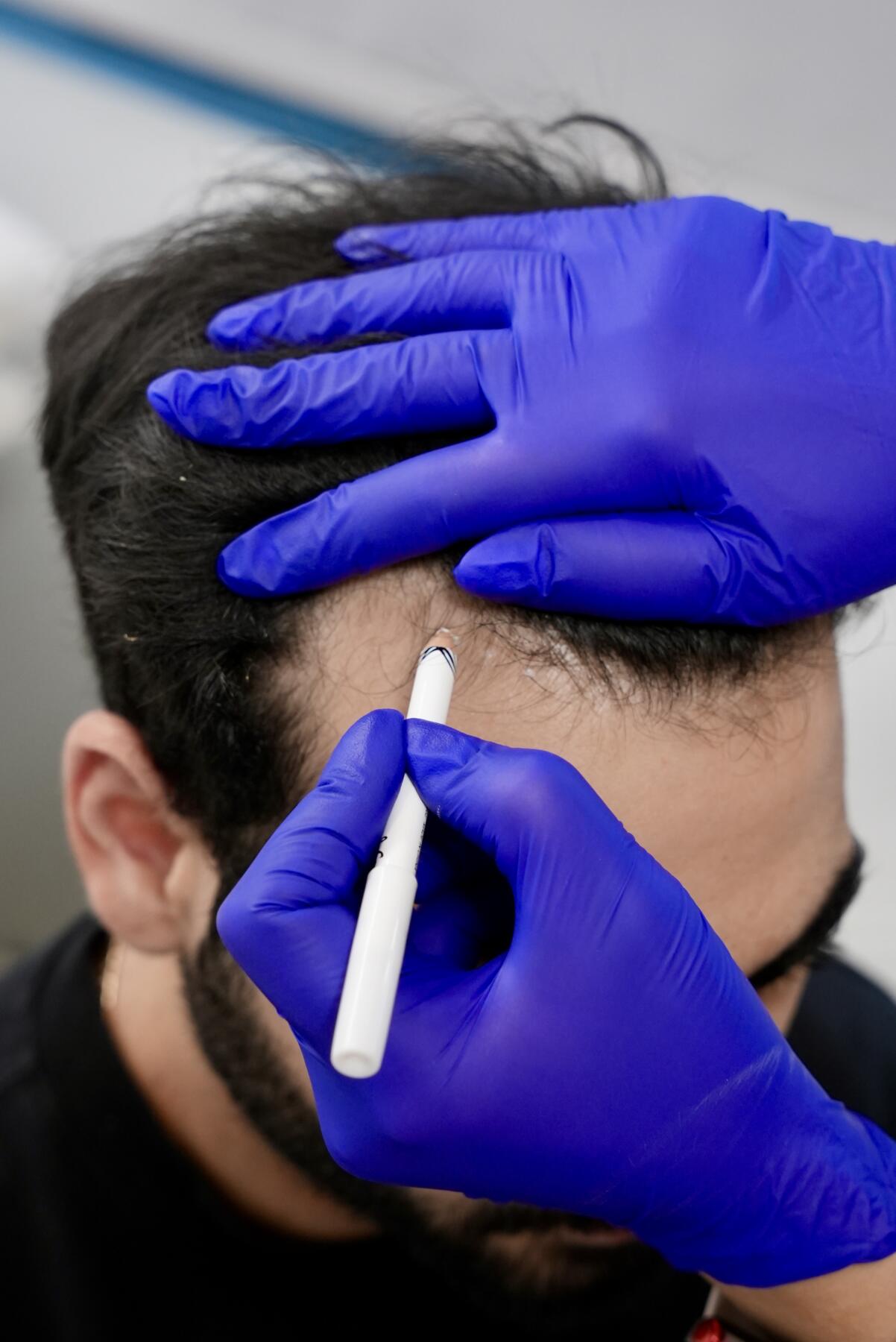
A Hair Transplant is initiated Long Before the Procedure
When most people think about a hair transplant, they usually focus on the day of the procedure itself: harvesting grafts, implanting them, and achieving the final aesthetic result.
In real time, however, the success of a hair transplant does not begin in the operating room.
It begins much earlier, with a thorough medical assessment.
Identifying the underlying cause of hair loss is perhaps the single most important factor determining the success or failure of a hair transplant procedure.
For this reason, the presence of a Dermatologist within a hair transplant clinic is not a luxury—it is a prerequisite for responsible medical practice.
Not All Hair Loss Is the Same
Androgenetic alopecia is the most common cause of hair loss, but it is far from the only one.
Behind an area of thinning hair may lie:
- Inflammatory scalp disorders
- Autoimmune diseases
- Scarring alopecias
- Dermatitis
- Psoriasis
- Fungal infections
- Telogen effluvium
- Thyroid disorders
- Hormonal imbalances
- Nutritional deficiencies
Many of these conditions are highly treatable when diagnosed early.
However, when they remain undiagnosed, they may affect not only the progression of hair loss but also the final outcome of a hair transplant.
When Diagnosis Comes Before Transplantation
An experienced Dermatologist does not simply determine whether hair loss is present.
They evaluate:
- The type of alopecia
- The presence of active inflammation
- Disease stability
- The condition of the donor area
- The likelihood of future hair loss progression
This assessment may include:
- Clinical examination
- Trichoscopy
- Laboratory investigations when necessary
- Skin biopsy in selected cases
Without an accurate diagnosis, there can be no safe and effective treatment plan.
Hair transplantation is not just a technical procedure involving graft implantation. It is a medical intervention that requires a precise understanding of the condition being treated.
Scarring Alopecias: A Clear Example of Why Dermatological Evaluation Matters
Scarring alopecias represent one of the most important examples of why dermatological assessment is essential.
These conditions involve chronic inflammation or immune-mediated dysfunction that progressively destroys hair follicles.
When the disease is active, hair transplantation is generally not an appropriate solution.
Instead, it may result in:
- Loss of transplanted grafts
- Worsening inflammation
- Unsatisfactory cosmetic outcomes
The crucial point is that many of these conditions can be effectively stabilized with appropriate treatment.
In numerous cases, once long-term remission has been achieved, hair transplantation can be reconsidered under far more favorable conditions and with significantly higher chances of success.
Scalp Folliculitis: A Seemingly Simple Condition That Can Affect Results
Another excellent example of the importance of dermatological evaluation is scalp folliculitis.
Folliculitis is an inflammatory condition affecting the hair follicles and may present with:
- Redness
- Small pimples or pustules
- Scalp tenderness or itching
- Recurrent episodes of inflammation
Many patients assume that folliculitis is merely a temporary scalp irritation. However, when inflammation remains active or untreated, it can significantly compromise the environment in which transplanted hair follicles must survive and grow.
Performing a hair transplant on a scalp with active folliculitis increases the risk of:
- Prolonged inflammation
- Delayed healing
- Reduced graft survival
- Suboptimal final results
Most importantly, in the majority of cases, folliculitis can be accurately diagnosed and effectively treated by a Dermatologist before surgery.
In other words, the problem is not the condition itself—it is the failure to recognize and treat it.
A condition that could have been managed relatively easily before transplantation may otherwise become a significant factor negatively affecting the quality and long-term stability of the final result.
When the Problem Is Not the Transplant but the Lack of Diagnosis
One of the most common mistakes is assuming that every case of hair thinning is simply androgenetic alopecia.
When an underlying dermatological condition remains undiagnosed:
- Hair loss continues to progress
- Inflammation remains active
- Scalp quality deteriorates
- The outcome of the transplant is placed at risk
In reality, the hair transplant technique is not to blame.
The issue is that treatment was performed before addressing the true underlying cause of the problem.
Effective Treatment Starts with Identifying the Cause
In many cases, treating an underlying dermatological condition can:
- Halt the progression of hair loss
- Improve scalp health
- Protect the donor area
- Create optimal conditions for future transplantation
Sometimes, appropriate treatment may even significantly reduce the need for surgical intervention.
A hair transplant should not be the first response to every form of hair loss. Instead, it should form part of a comprehensive treatment strategy based on an accurate diagnosis.
The Guru Derma Philosophy
At Guru Derma Hair Clinic, we believe that hair transplantation is the final step of a comprehensive medical process—not the first.
For this reason, every patient is initially evaluated by our Dermatologist with the aim of:
- Establishing an accurate diagnosis
- Excluding underlying medical conditions
- Stabilizing the scalp when necessary
- Designing the most appropriate treatment strategy
The presence of a Dermatologist does more than protect the outcome of the transplant.
It protects the patient.
In Summary
The success of a hair transplant does not depend solely on surgical technique or the number of grafts implanted.
It depends on something even more fundamental: accurate diagnosis.
Many scalp and dermatological conditions affecting hair growth can be successfully treated when identified early. Conversely, when they remain undiagnosed, they can jeopardize even the most expertly performed hair transplant.
The greatest problem is not the presence of a medical condition—it is the failure to recognize and treat it.
That is why, in a clinic that truly prioritizes patient care, the presence of a Dermatologist is not optional.
It is essential.